
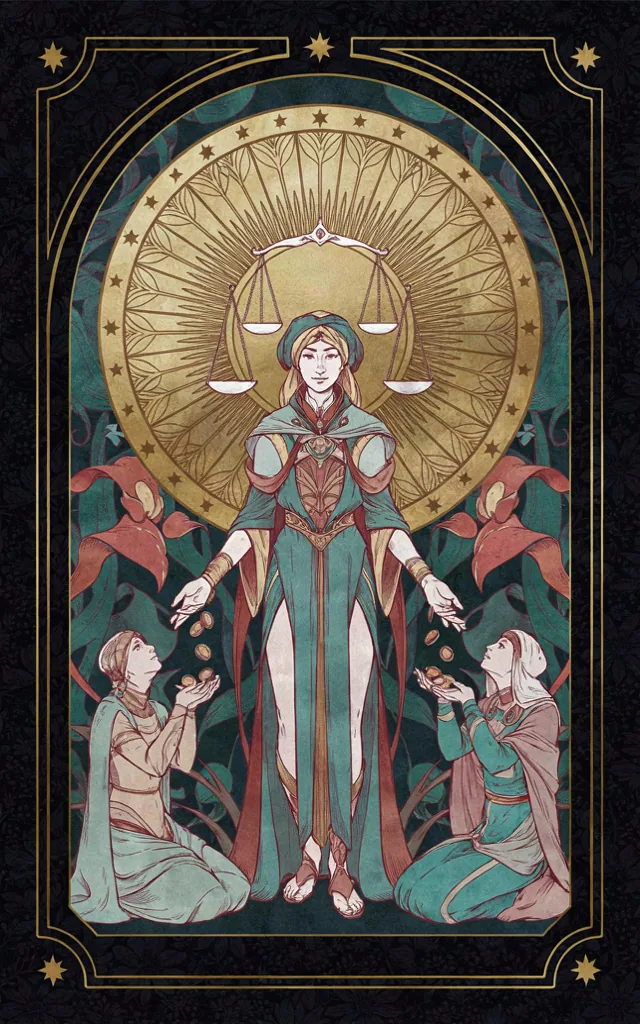
pentacles · Minor Arcana
Six of Pentacles
“I give what I can and receive what I need without shame.”
Six of Pentacles upright means generosity, giving and receiving, fair exchange; reversed, it means strings attached, imbalanced giving, difficulty receiving.
Upright
- generosity
- giving and receiving
- fair exchange
- support flowing
- balanced sharing
A figure distributes coins to those in need, scales held steady in the other hand — generosity paired with fairness. The Six of Pentacles is about the flow of resources between people: giving when you're able, receiving when you need to, and recognizing that both are part of the same honest exchange. This card often appears when support is moving your way, whether that's material help, mentorship, or simple kindness, or when you're the one positioned to offer it. Notice the dynamic at play and aim for balance rather than either extreme of pride or guilt.
Reversed
- strings attached
- imbalanced giving
- difficulty receiving
- questioning motives
The scales have tipped. Reversed, the Six of Pentacles can point to generosity with hidden strings — help given to create obligation or control rather than out of genuine care. It can also describe difficulty receiving, a reluctance to accept support even when it's freely offered, or a one-sided dynamic where one person always gives and the other always takes. Look honestly at the exchange: is it actually mutual, or has it quietly become unbalanced? Naming the imbalance is the first step to correcting it.
Themes in depth
How Six of Pentacles speaks to different areas of life.
Love
Upright
Giving and receiving flow evenly between you and a partner right now — support, affection, and effort are being reciprocated in a way that feels fair. If single, someone generous may show real interest. Let yourself both give freely and receive graciously.
Reversed
Check whether one person is doing all the giving, or whether generosity in the relationship comes with unspoken expectations attached. A healthy connection allows both people to receive without feeling indebted and to give without needing control.
Career
Upright
Mentorship, fair compensation, or a helpful professional exchange is likely now. Whether you're the one offering guidance or receiving it, the dynamic feels equitable. Stay open to both giving your expertise and accepting support from those more experienced.
Reversed
Watch for professional favors that come with strings attached, or an imbalance where your contributions go unrecognized while others benefit. Reassess whether this exchange is actually fair, and don't be afraid to renegotiate the terms.
Wellness
Upright
You're in a healthy cycle of giving and receiving care — asking for help when you need it and offering support to others without depleting yourself. This reciprocity is a sign of genuine balance in how you tend to your wellbeing and your relationships.
Reversed
You may find it hard to accept care even when it's offered, or you're giving so much of yourself to others that your own needs go unmet. Practice receiving without guilt; it's as essential to balance as generosity itself.
Yes or No?
Leans yesLeans yes when the question is about fair exchange, like asking for help, settling a debt, or getting paid back. It turns maybe if there are strings attached or one side is doing all the giving. Check the terms first.
Reading It in Real Situations
When It's Unclear Between You
Upright
Attention and effort seem to go both ways: they ask about your day, you reply, and plans are shared. Notice whether the giving is balanced over weeks. One person always paying, planning, or reaching out signals an uneven trade.
Reversed
There may be strings. Gifts or favors arrive with expectations, or one of you keeps score. Ask yourself if you are giving to be close or to be owed. A relationship should be able to receive thanks without needing repayment.
Getting Back With an Ex
Upright
If you are reconnecting, look at what each side has given and received. Are there debts, like unreturned things, money, or unspoken apologies? Settling these cleanly is a fair first move. A gift as a sign of reconciliation may not be one.
Reversed
The past exchange may have been uneven: you gave far more than you got, or you were helped in ways that now feel like a hold. Reciprocity cannot be forced. Pressure to repay through contact or intimacy is a warning sign, and a counselor or trusted friend can help.
Job Hunting
Upright
Good for networking and fair offers. A former manager vouches for you, a mentor shares a lead, or an employer offers fair pay. Compare the offer to market norms and ask for terms in writing. Offer your own help back too.
Reversed
The offer comes with conditions: unpaid trial work, vague promises, or a boss who expects favors. Check whether pay matches duties. If a contact helps you, clarify what they hope for in return. You can accept help without owing more than you can give.
Money Worries
Upright
Money moves in a healthy circle: a fair wage, a shared bill paid evenly, or a small gift between friends. Be clear about loans among people you know. This is about daily fairness, and does not recommend where to put your money.
Reversed
Money tangles with obligation: a loan that is hard to refuse, a relative who asks too often, or you giving more than you can afford. State a limit you can keep and write down any agreement. Accepting help is fine when the terms are clear.
What to Look For in the Card
Based on the classic 1909 imagery. Details differ in other deck styles.
A well-dressed merchant holds a pair of scales in one hand and drops coins into the palm of a kneeling beggar with the other. A second beggar waits beside him, and more coins hang above. The scales are the easy detail to skip, yet they reshape the card: giving is weighed, not spontaneous. The merchant stands while the others kneel, so power is uneven even when the kindness is real. Both giving and receiving have terms, and the picture shows who sets them.
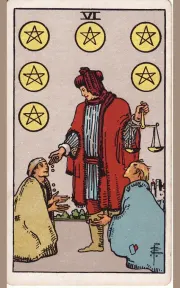
Classic 1909

Style Ⅰ

Style Ⅱ
How It Gets Misread
Often taken as pure generosity. The scales and the kneeling say there is a balance and a hierarchy at work. The card can describe a fair exchange, a loan, a mentor, a donation, or a favor that carries expectations. Ask who is giving, who is receiving, and whether either side feels owed. The good version is mutual and fair, with both people clear about the terms.
One Small Thing to Do
Look at one small imbalance in your give-and-take: a favor you owe, an effort you keep carrying alone, a cost that always lands on you. Either settle it with a short message, or ask openly for what would even it out.
A Question to Sit With
Is what I give or receive balanced, and do both sides know the terms?
When It Appears With
 Justice
With Justice, the scales become explicit: the exchange should be fair on paper and in practice. Look at the terms before the feelings.
 The Empress
With the Empress, giving comes from abundance rather than obligation. It costs the giver little and means a lot to the receiver, so check that it is freely meant.
More from the Suit of pentacles
Same Number, Other Suits
Bring This Card to a Real Question
A card means more once it is sitting in your own question.
Learn to Read It
Want to see this card in a reading?
Draw Your Card